

Want a room to feel new without repainting a wall or buying furniture? Start with the soft stuff. Throw pillows and blankets are the fastest, most forgiving way to add warmth, color, and texture, and they cost a fraction of anything else in the room.
Why Pillows and Throws Do So Much for So Little
A sofa is a big rectangle of one color, and left alone it reads flat. Add two or three pillows in different textures and a throw over one arm, and the whole thing looks styled and lived in. You did not change the couch, just everything around it.
- They add color without commitment. A wall color is a weekend project. A pillow cover is a five second swap.
- They add texture, which is what your eye actually craves. A linen weave next to a chunky knit next to a smooth velvet gives a room depth paint alone never will.
- They soften hard edges. Sofas, wood floors, and glass tables all feel friendlier with something soft in the mix, and nothing else delivers this much visible change for the money.
The Insider Trick: Buy Covers, Not Whole Pillows
Here is the move that saves money and makes your pillows look better: stop buying finished throw pillows. Buy removable covers and quality inserts separately, then mix and match.
- Buy good inserts once, keep them forever. A down or down-alternative insert has body and bounce that cheap polyester filler never gets. That filler is what makes a pillow look flat, so this is where your dollars matter most.
- Size the insert up one size for a full, plump look. Put a 20 by 20 insert into an 18 by 18 cover, or a 22 by 22 into a 20 by 20. That slight overstuffing fixes flat pillows instantly.
- Wash the covers, not the whole pillow. Covers zip off and go in the laundry, so you can own light colors and still live with kids, pets, and snack nights.
- Swap covers by season for a nearly free refresh. Warm rust and velvet for fall, crisp white and linen for spring. You store flat fabric squares, not a closet full of bulky pillows.
Standard insert sizes to know: 18 by 18 for smaller sofas and accent chairs, 20 by 20 as the everyday workhorse, and 22 by 22 for a deeper couch or a bolder statement.
Mixing Pillows So It Looks Intentional
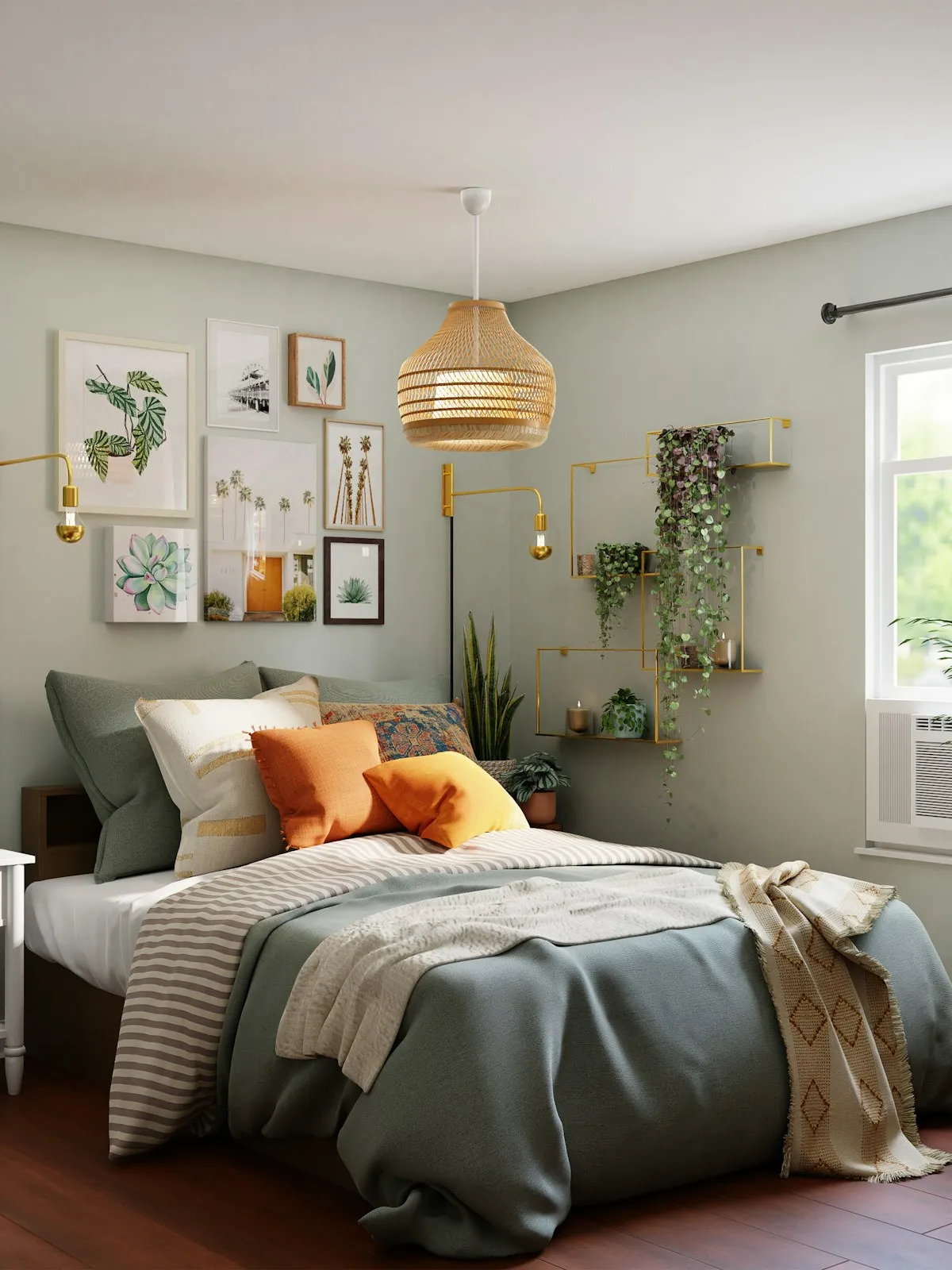
A pile of pillows from one matching set looks like it came off a showroom floor. A thoughtful mix looks like you. The trick is variety inside a plan.
- Vary the sizes. Pair a larger 22 by 22 in back with a 20 by 20 or an 18 by 18 in front. The size step gives the group a natural, layered depth.
- Vary the textures. One smooth, one nubby, one soft. If everything is the same fabric, the group falls flat even with different colors.
- Work in odd numbers. Three on a loveseat, five across a full sofa. Odd groupings feel relaxed, while perfectly symmetrical pairs can feel stiff.
- One pattern, the rest solids. Let a single patterned pillow lead, then pull one or two of its colors into the solids around it. That shared color story ties it together.
- Pick a palette and stay in it. Three or four colors that repeat read as calm and designed. Ten random colors read as clutter.
Throw Blankets, Done Right
A throw blanket is half comfort, half sculpture. It should look reachable and warm, not like a museum display.
- Choose texture first. A chunky knit, a waffle weave, or a woven throw with fringe brings tactile interest a flat fleece cannot.
- Drape it, do not fold it stiffly. Lay it over one arm or across a back corner with a loose fold. A perfectly folded square looks untouched and a little cold.
- Give them a home. A woven basket by the sofa holds two or three throws, keeps them within reach on a cold night, and doubles as texture in the corner.
- Match the weight to the room. A heavy knit anchors a big sectional; a lighter cotton throw suits a reading chair or a bed.
How Many Pillows, and the Look to Avoid
The most common mistake is a row of tiny, thin, matching pillows lined up like soldiers. It reads busy and leaves nowhere to sit. Fewer, fuller, better pillows always win.
- Accent chair: one pillow, or two if it is wide.
- Loveseat: two or three total.
- Standard sofa: three to five, in a mix of sizes.
- Large sectional: five to seven, grouped in the corners rather than spread across every cushion.
Whatever the number, keep them plump. A few generous pillows always beat a crowd of flat little ones.
Frequently asked questions
Why do my throw pillows look flat?
Usually two things: a low quality insert and a cover that fits too loosely. Switch to a down or down-alternative insert and size it up one size (a 20 by 20 insert in an 18 by 18 cover) for instant fullness.
How many throw pillows should I put on a sofa?
Three to five on a standard sofa, in a mix of sizes and textures. Use odd numbers, and lean toward fewer, fuller pillows rather than a long row of small flat ones.
Are separate covers and inserts really cheaper?
Over time, yes. You buy quality inserts once and keep them for years, then swap inexpensive covers by season instead of buying whole new pillows.
What kind of throw blanket looks best on a couch?
Reach for texture: a chunky knit, a waffle weave, or a woven throw with fringe. Drape it loosely over an arm rather than folding it into a stiff square.
House Home Decors may earn a commission from purchases made through our links, at no extra cost to you.